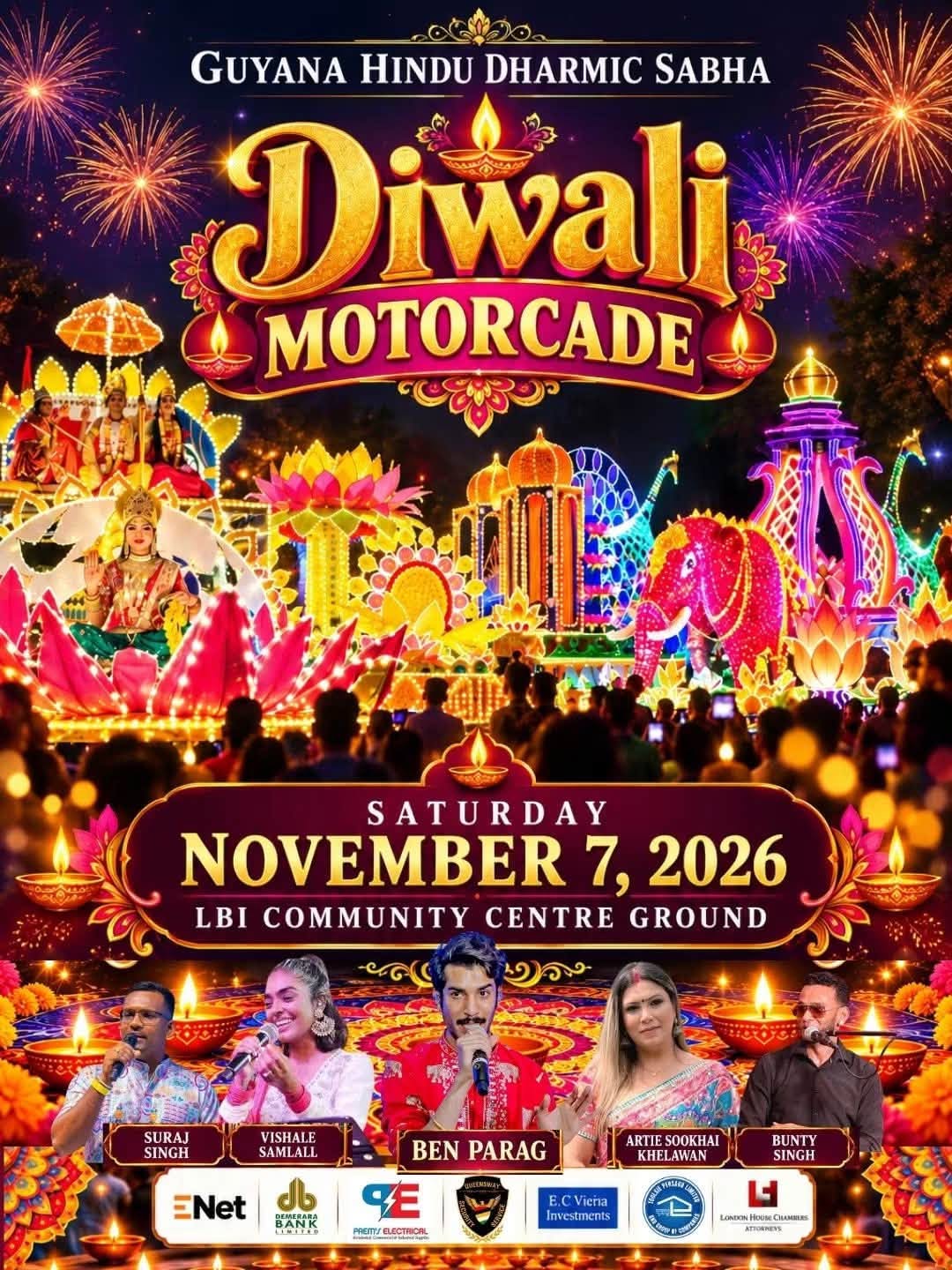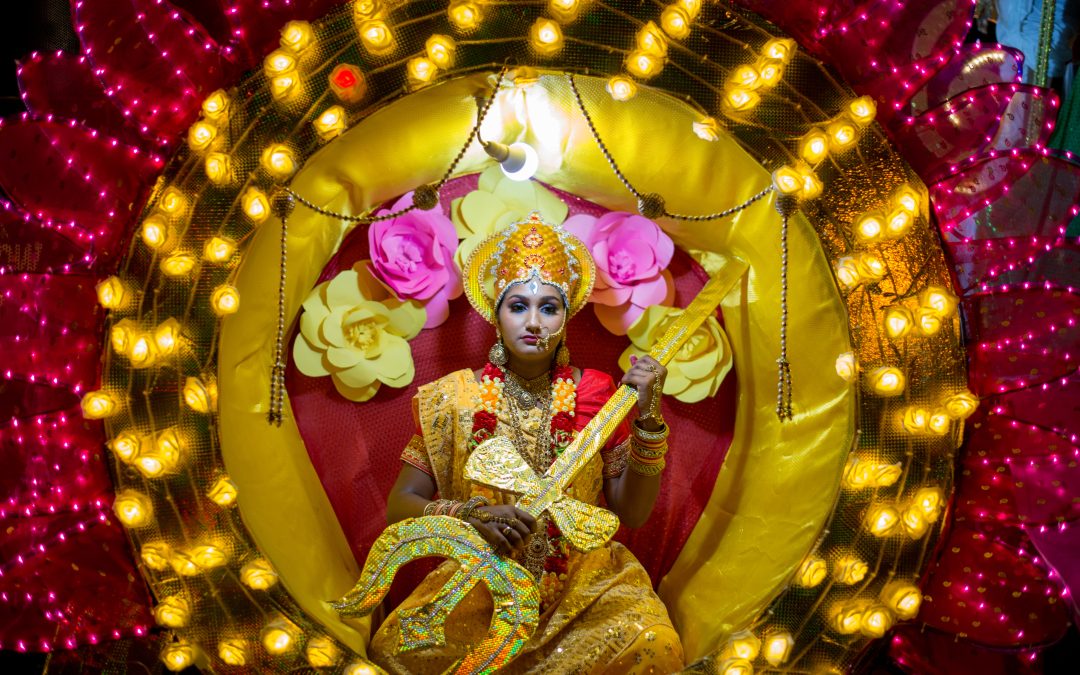
When the floats of the Guyana Hindu Dharmic Sabha’s Diwali Motorcade light up the road, the public sees a spectacle of lights and creativity. Look a little closer, and you’ll see the work of the many hands that brought each idea to life. Ahead of the Georgetown and East Coast Demerara motorcade on Saturday, November 7, here’s a look at what goes into building a float.
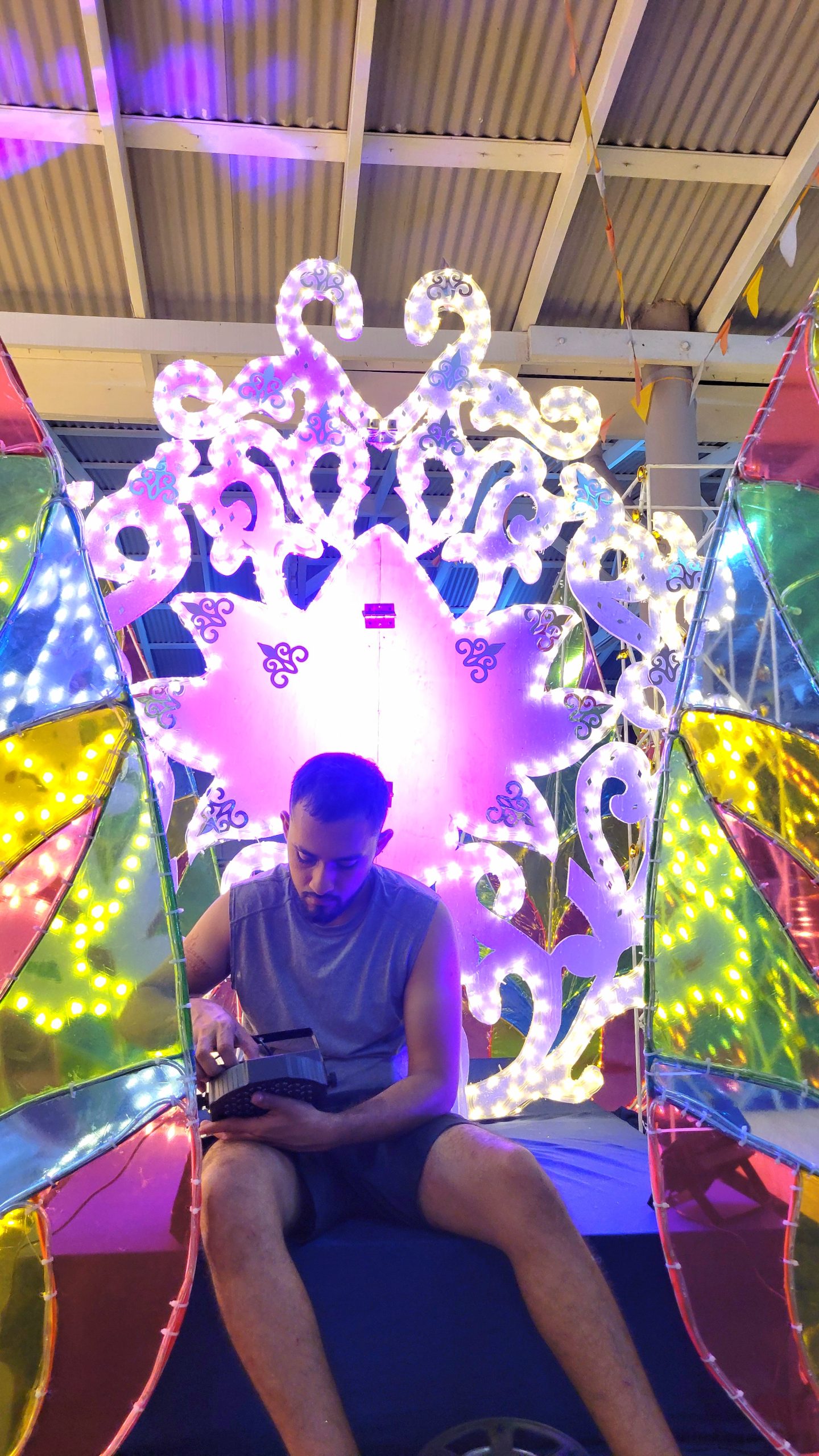
A float builder working on the lights of one of the floats.
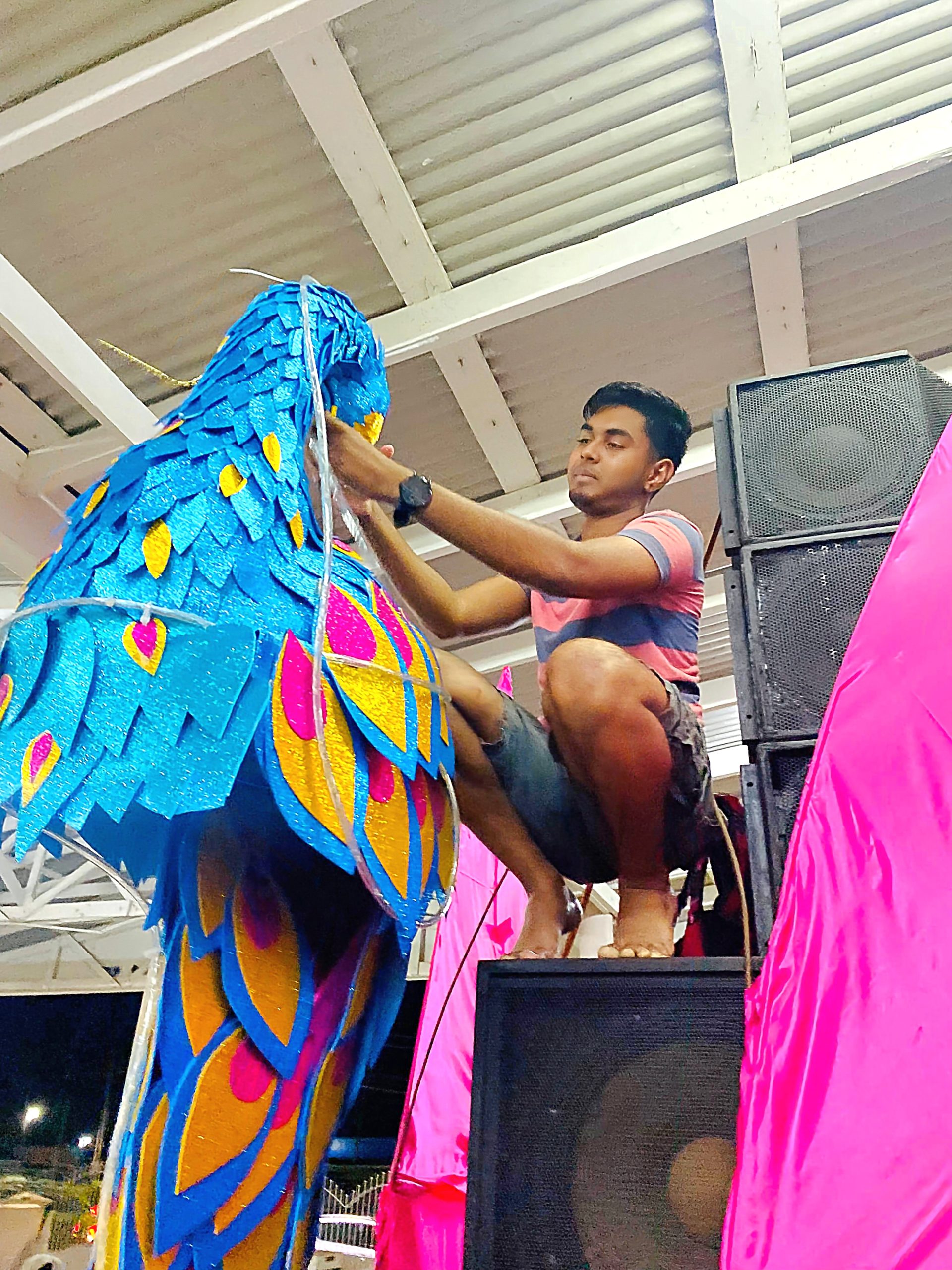
Putting together the finishing touches.
The weeks leading up to the Diwali Motorcade are among the most demanding and rewarding for those who take part.
Building a float gives participants a chance to learn about Hinduism through storytelling, express their creativity and work alongside young people and others in their community.
Most float teams are led by the chairperson of a youth group or mandir. Some team members are experienced craftspeople, while many are newcomers who get the chance to learn by helping with everything from engineering and design to building and decorating.
The work usually begins about two months before the event, when designers start sketching ideas that meet the judging criteria. Each year brings new materials, techniques and technical elements. Some teams choose to keep a more traditional style, using live singing, tree branches and simple lighting.
Once the design is in place, teams look for sponsors and for vehicle or trailer owners willing to lend what they need. Then the fun begins. They sketch the designs onto surfaces, source materials and set out a plan for the days ahead. Communities, mandirs and youth groups from Essequibo to Berbice come together to build floats for the annual motorcade.
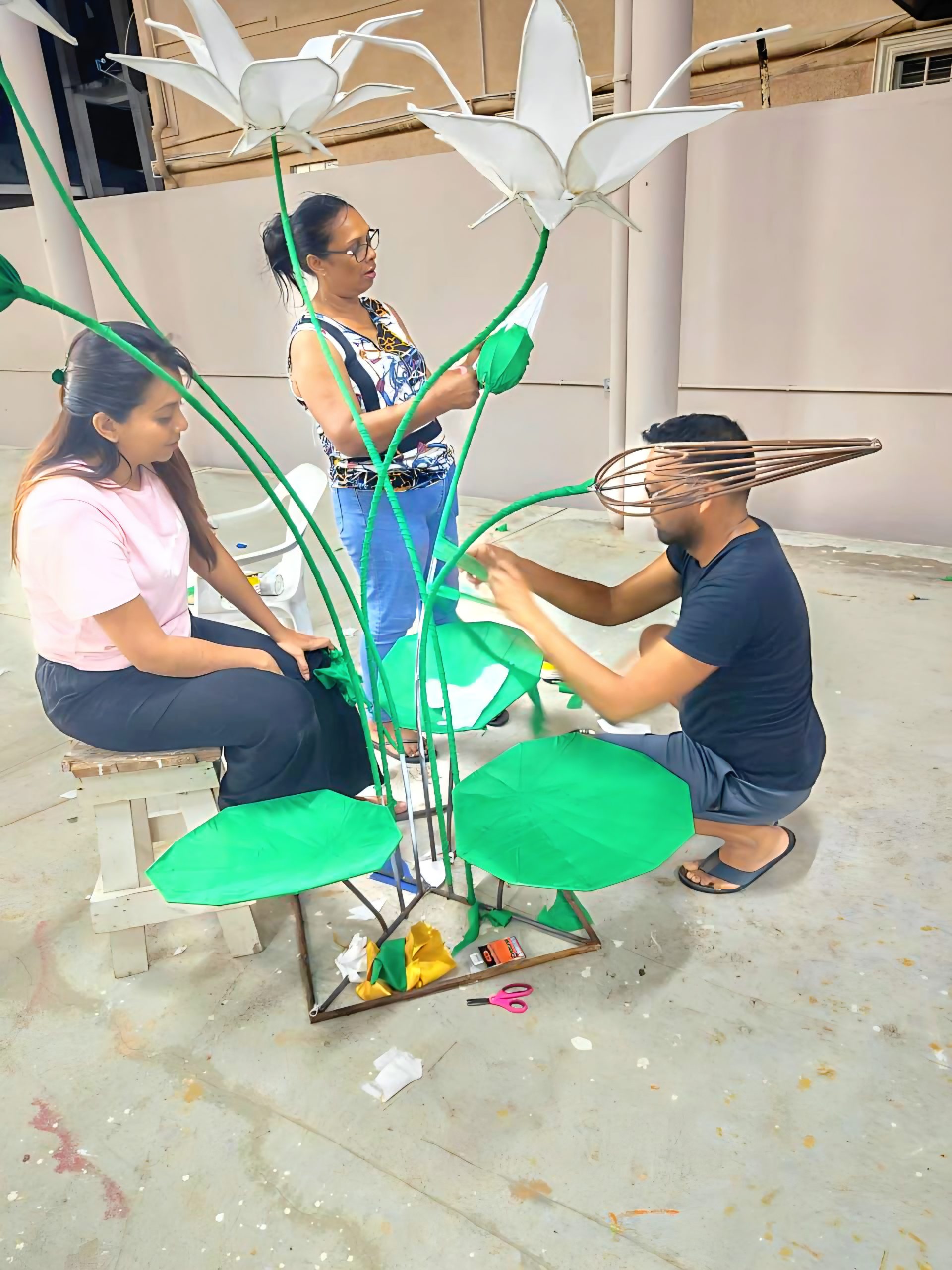
Volunteers wrap stems and attach green leaves beneath oversized white blossoms.
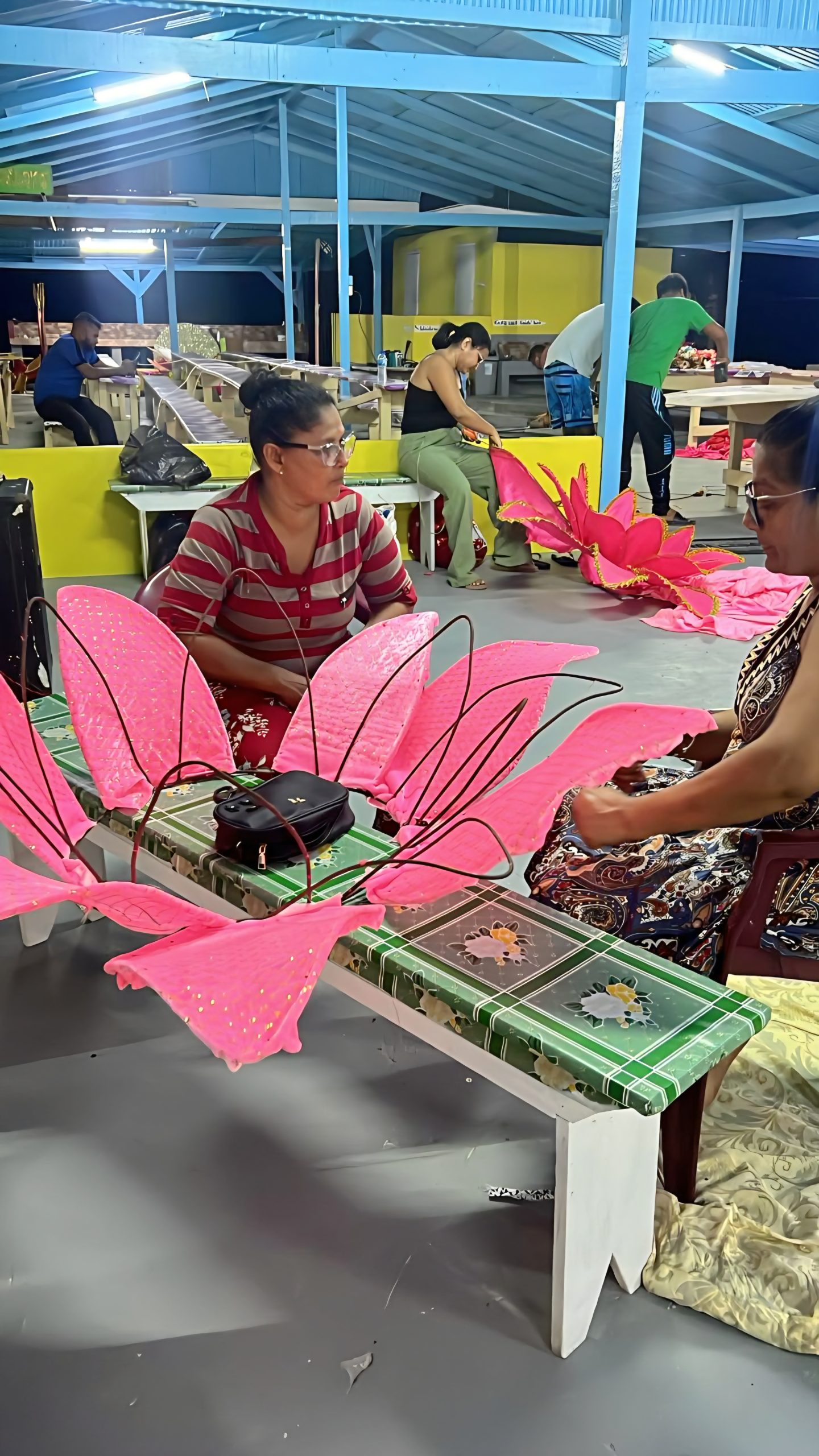
Around a workbench, volunteers fit bright pink fabric petals onto the metal frame of a lotus.
Most of the team members are volunteers. They bend steel rods into the shape of lotus flowers, cut plywood into intricate forms inspired by Vedic architecture and use fabric, paint and lights to bring the story of Diwali to life.
Just as much care goes into preparing the performers who portray Hindu gods and goddesses. Their costumes draw on descriptions of the divine in sacred texts. The women often sew the main garments, while younger team members add the glitter and finishing touches.
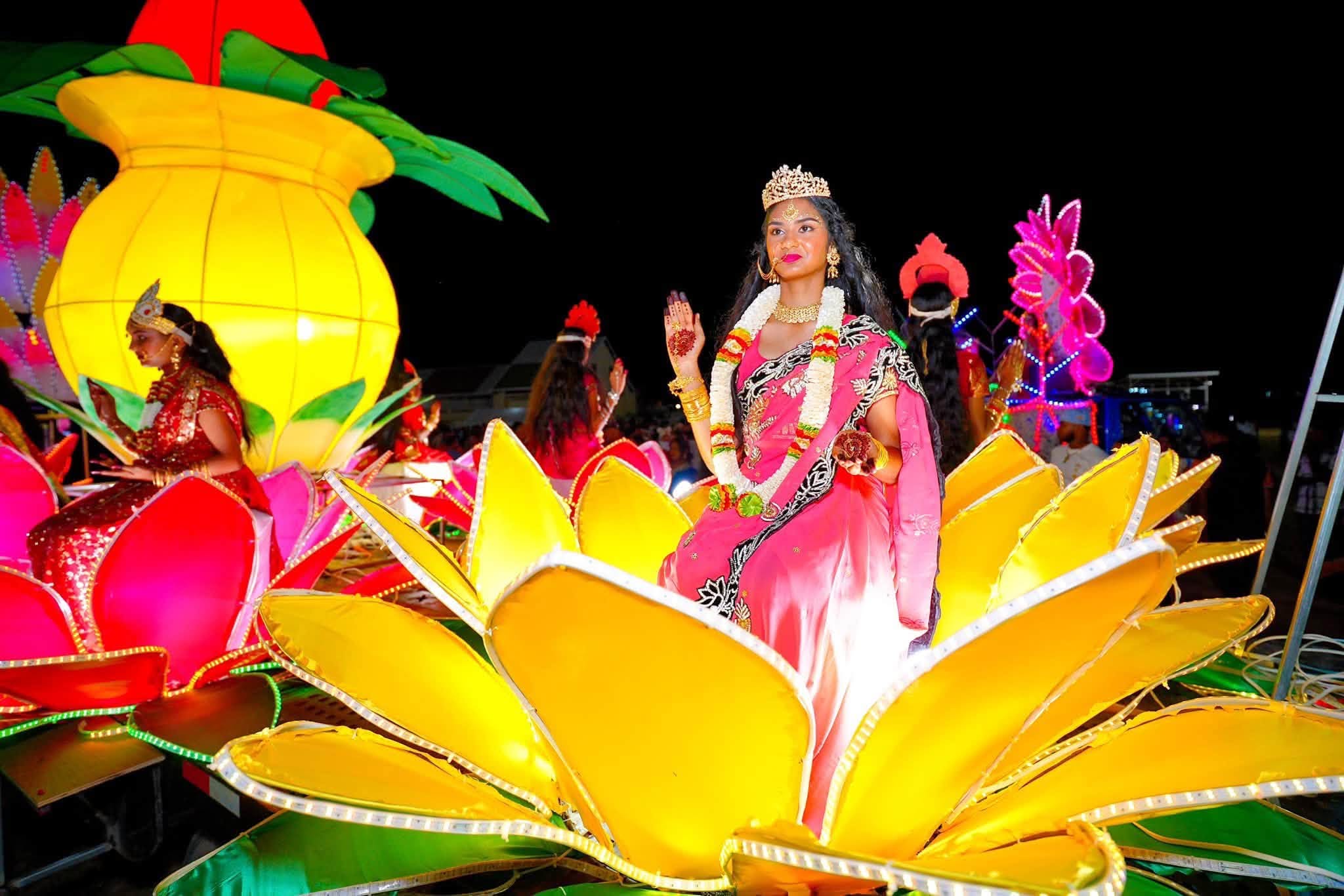
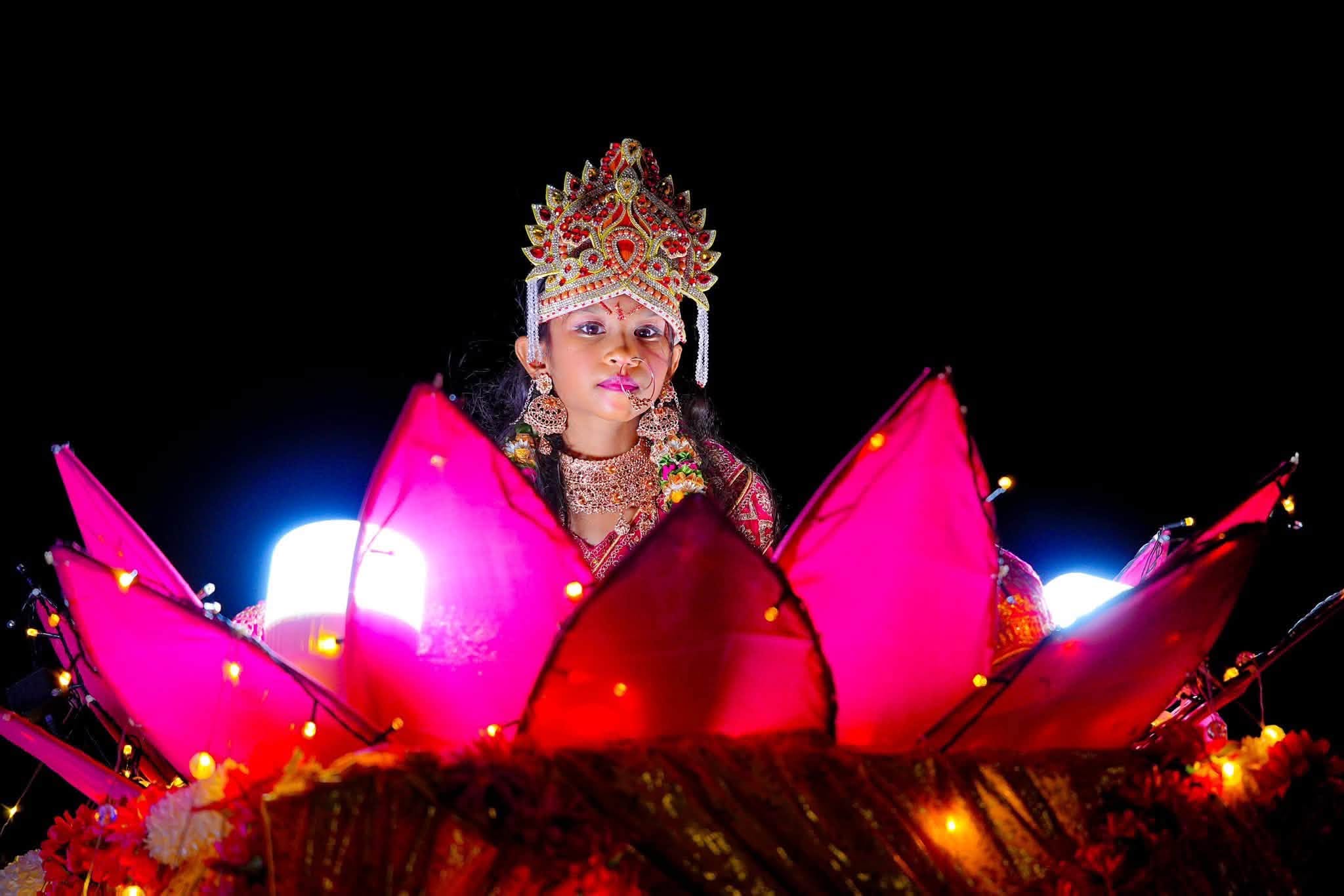
Scenes from the Guyana Hindu Dharmic Sabha Upper Corentyne Praant Motorcade
Long nights take on a rhythm of their own, with music playing, snacks being passed around and the sound of heavy-duty tools in the background. As the float takes shape and the deadline draws closer, the team finds another burst of energy to get everything ready.
Then it all comes together. The generators, sound equipment and lights are loaded, the performers take their places, and the float is ready for the road. For the volunteers, seeing people of all ages gather along the route to celebrate Diwali is perhaps the greatest reward for months of planning and countless hours of work.
Diwali Motorcades Across Guyana
The Georgetown and East Coast Demerara motorcade is one of several held across Guyana during the Diwali season. Communities in Demerara, Essequibo and Berbice also host motorcades, with local mandirs and youth groups bringing their own illuminated floats to the celebrations.
2026 Georgetown and East Coast Demerara Diwali Motorcade
On Saturday, November 7, floats will assemble from 5:30 p.m. at Shri Krishna Mandir in Campbellville and depart at 6:30 p.m. The procession will travel along Sandy Babb Street, onto Vlissengen Road and along the Seawall to the LBI Community Centre Ground. A free cultural programme and prize presentation are scheduled at LBI from 7 p.m.
Visit the Guyana Hindu Dharmic Sabha Facebook Page for more information.